The Four Turandot: an opera to walk through
Eight performances in four theatres, across the United States, Italy, Korea and China, captured to reconstruct Turandot in virtual reality: sound, gestures, faces, theatres.
The Four Turandot (T4T) is an internationalisation project financed by Italy’s EU-funded recovery plan (PNRR), led by the «Giuseppe Verdi» Conservatory of Milan with the Nicolini among the partners: Puccini’s Turandot staged with a double cast, two performances in each theatre, in four theatres — Augusta, in the United States, Milan, Daegu in South Korea, Hangzhou in China — and then reconstructed in a virtual environment, to be experienced with a headset too.
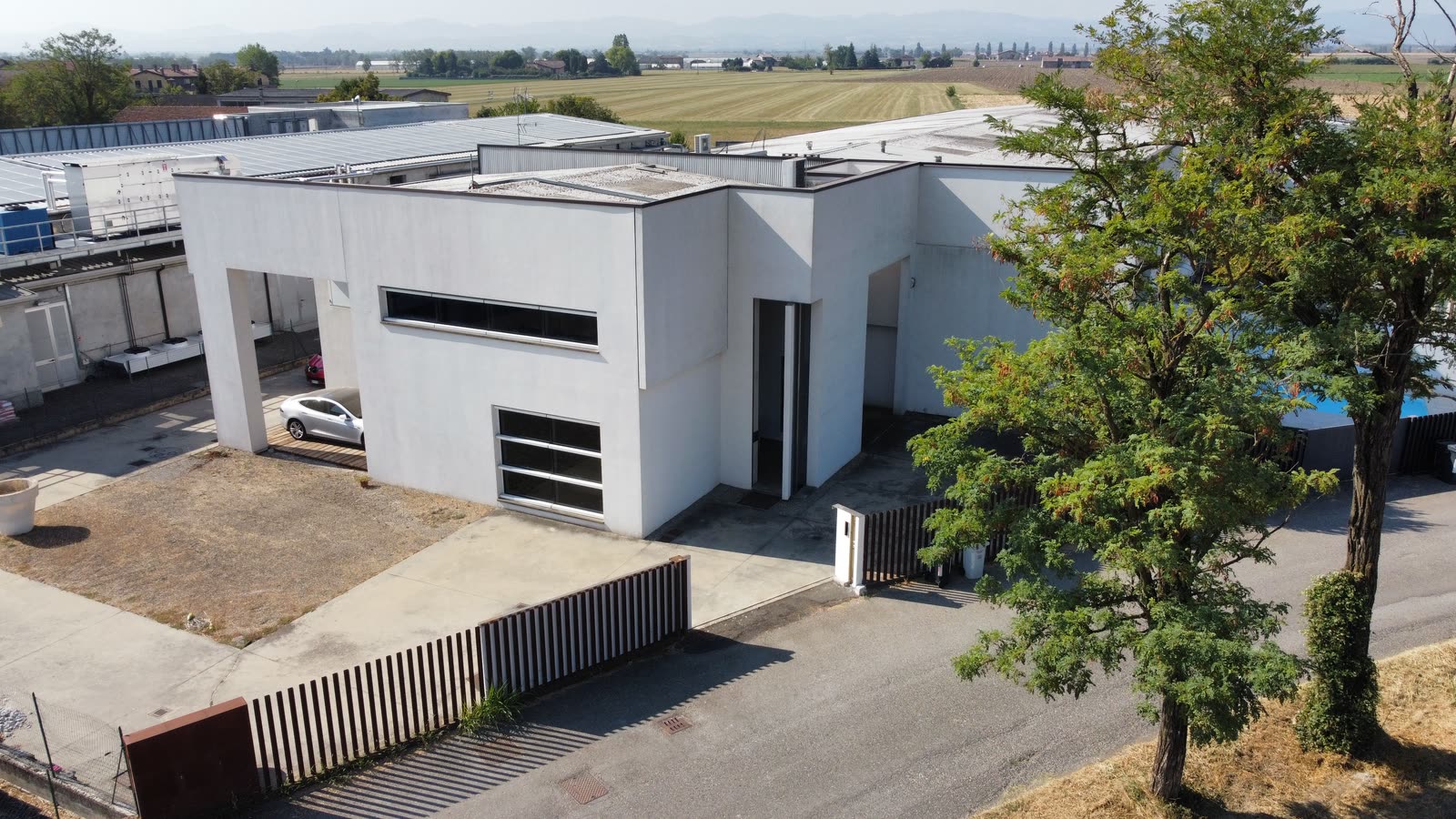
On behalf of the Nicolini, GR Studio holds the scientific responsibility for it. The assignment puts it like this: project direction, software programming, 3D scanning of the spaces, modelling of halls and faces, acoustic sampling, coordination of the live events and of production, research and tests with the partners.
The project has its own website, which we made: The Four Turandot, with the four stops and the four endings of the opera.
Before leaving
A tour begins with the technical rider: what the host theatre needs, what we bring, how two technical crews that do not share a language talk to each other. In winter we planned the trips one by one; in January came the site visits to Sala Verdi, in Milan, with the first capture tests.
What we brought home
From each performance, four things:
- sound in space — Ambisonics recordings, which keep the position of the orchestra and of the performers as they move;
- the acoustic signature of the theatre — the impulse responses of each hall, to make the virtual theatre sound like the real one;
- gesture — the performers’ movements, captured with an infrared OptiTrack system and with 360° cameras;
- faces and costumes — scans of all the performers, from both casts, in make-up and stage costume.
The theatre in 3D
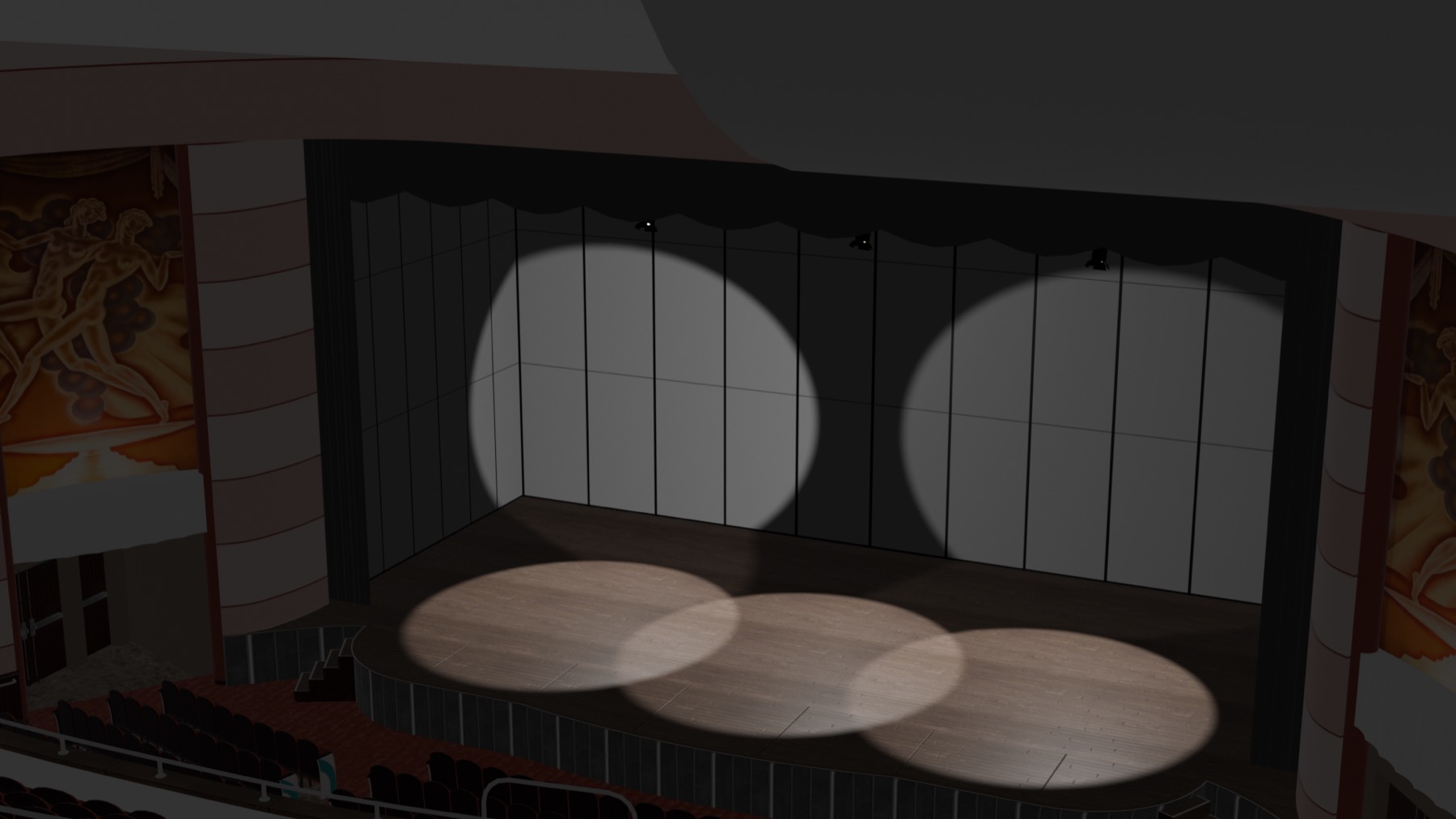
After China the work moved to the laboratories of XNL Musica and of the Conservatory, in Piacenza. There the theatres are reconstructed in three dimensions — stalls, gallery, proscenium, fly grid — and the performers return to the stage as digital characters. Alongside the virtual reality platform we are writing a second piece of software, which manages the impulse responses collected in the theatres and applies them to the virtual environments.
In May the leadership of the Dancz Center at the University of Georgia, our research partner on the software, came to Piacenza: days of review together, on method and on code.
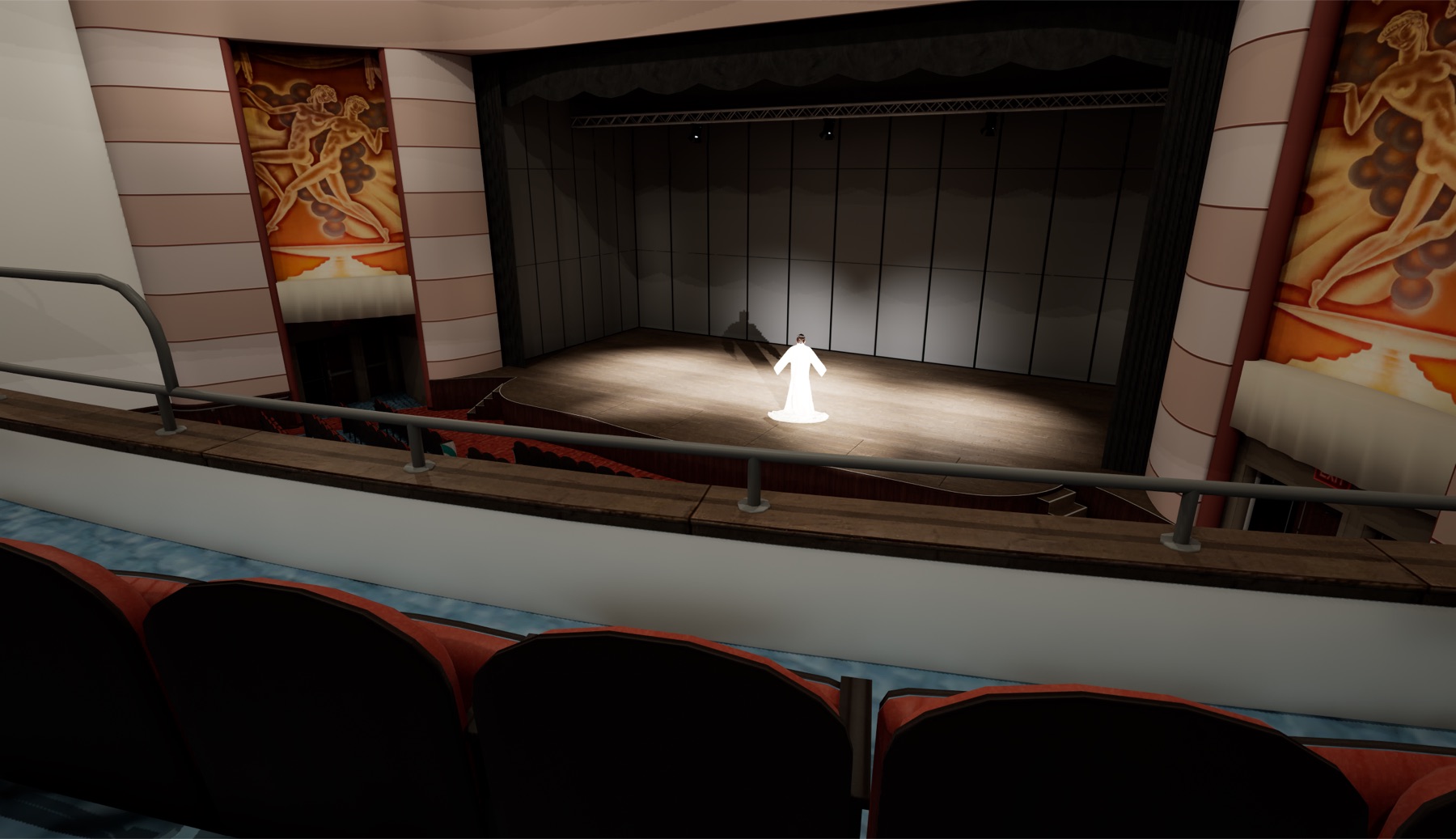
An excerpt: “Nessun dorma”
It is a demonstration video: Calaf, the stage and the hall are entirely reconstructed.
And then
The same laboratory is working on Oriental, the project that took us to Expo Osaka in 2025: there a concert filmed in 360°, here an opera to walk through.
In the press
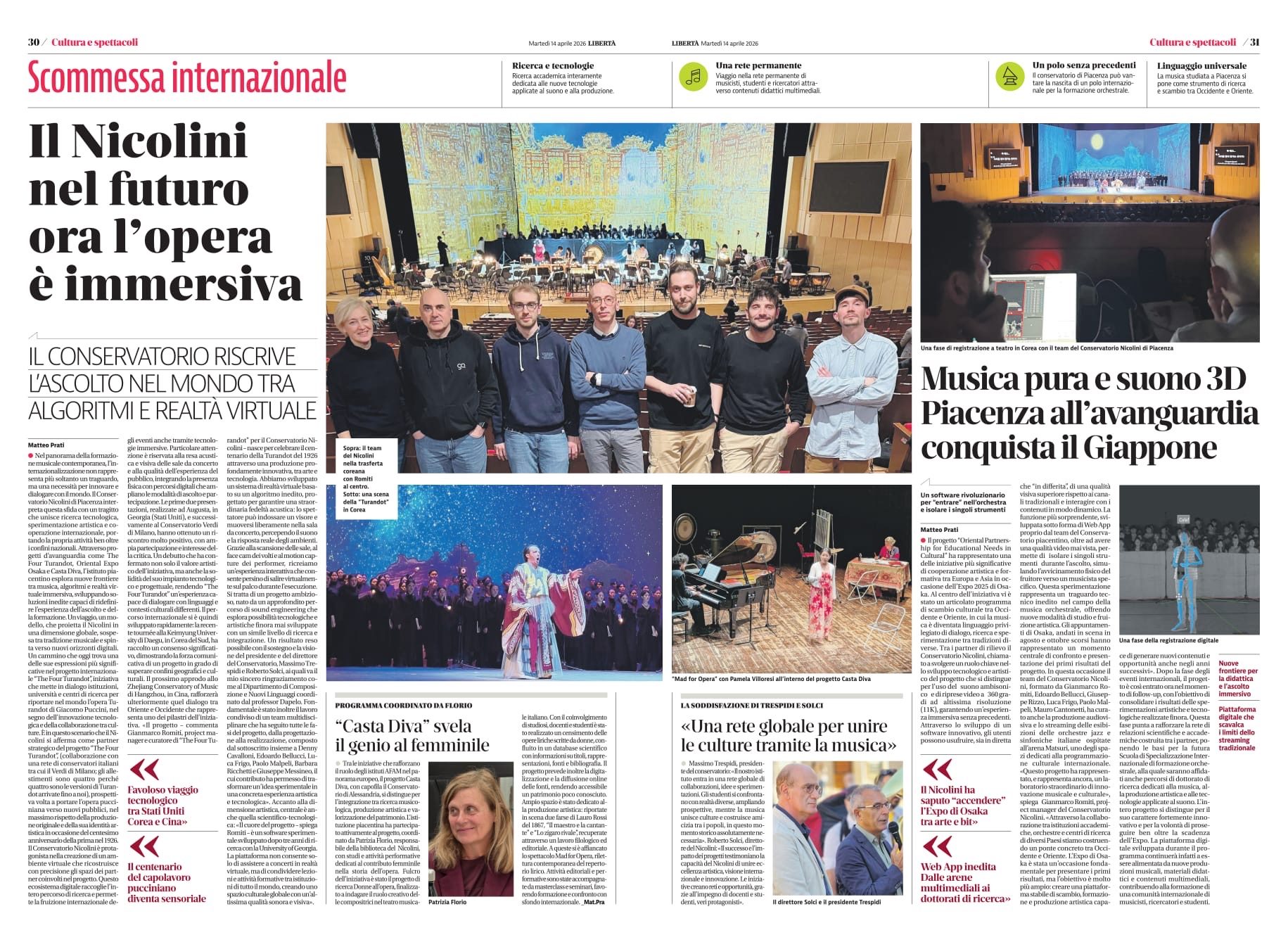
On 14 April 2026 Libertà, the Piacenza daily, gave two pages to the Nicolini’s international projects, opening with The Four Turandot. There Gianmarco explained that “the heart of the project is an experimental software developed after three years of research with the University of Georgia”. The clipping is in Italian.