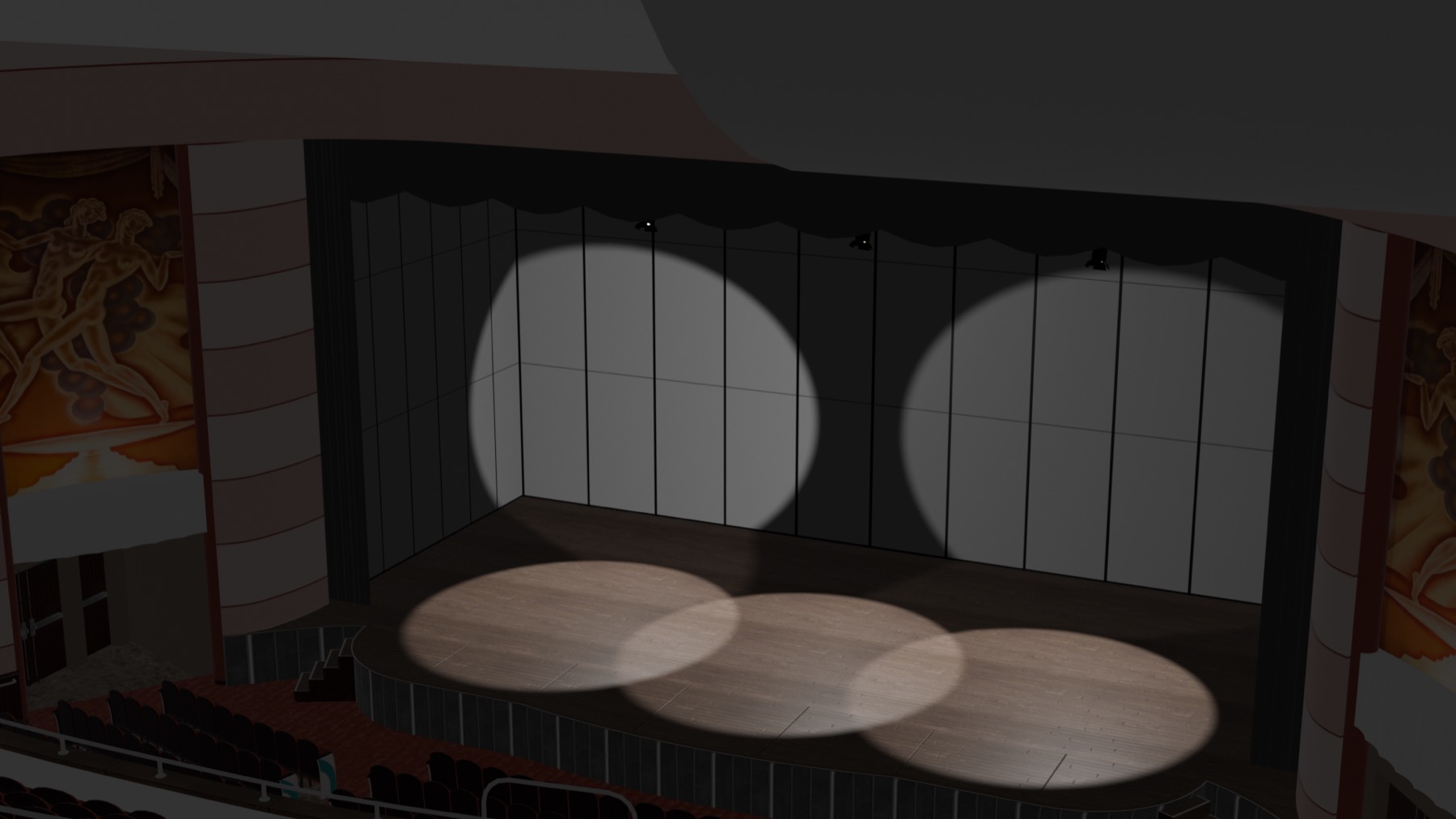
Oltre le nuvole: an exhibition to listen to
At XNL Piacenza, from 2 April to 5 July 2026: an art exhibition, three theatre evenings and a sound path about the sky. Gianmarco Romiti was one of the three curators; we designed and installed the sound: ten loudspeakers along the hall and a 16.2-channel listening room. More than eight thousand visitors.
From 2 April to 5 July 2026 XNL Piacenza, the centre for contemporary art, theatre and music of the Fondazione di Piacenza e Vigevano, gave all its spaces to the sky. Oltre le nuvole / Beyond the Clouds brought together an art exhibition, a theatre trilogy and a sound path, curated by Chiara Gatti, Paola Pedrazzini and Gianmarco Romiti, with the Storyville collective.
Gianmarco curated the sound path for XNL Musica. We designed, supplied and installed it, and kept it running for the full three months of the exhibition.
An exhibition, three plays, one sound
Around twenty artists, from Alfred Stieglitz’s skies over New York, photographed in 1929, to Piero Manzoni’s glass-fibre “clouds”, from Mario Schifano’s Cielo anemico to the clouds Leandro Erlich keeps in museum cases. The exhibition design, by Massimo Ferrari, Claudia Tinazzi and Annalucia D’Erchia of the Politecnico di Milano, spread over two floors: upstairs painting, sculpture and the archive films re-edited by Storyville; on the ground floor the installations and the sound.
The theatre programme, curated by Paola Pedrazzini, brought three plays about identity to XNL, by Davide Enia, Mario Perrotta and César Brie. All three evenings sold out.
The sound path
The music is an installation by the composer S. Ali Hosseini, developed with the New Languages Department of the Nicolini Conservatory. It makes one precise movement: from silence to fullness, and back to emptiness.
It starts at the entrance. Ten loudspeakers, along the hall and in the entrance area, hold a light, wide soundscape that goes along with your steps without asking for attention. As you look at the works, the sound slowly changes in density and position, and points you in a direction.
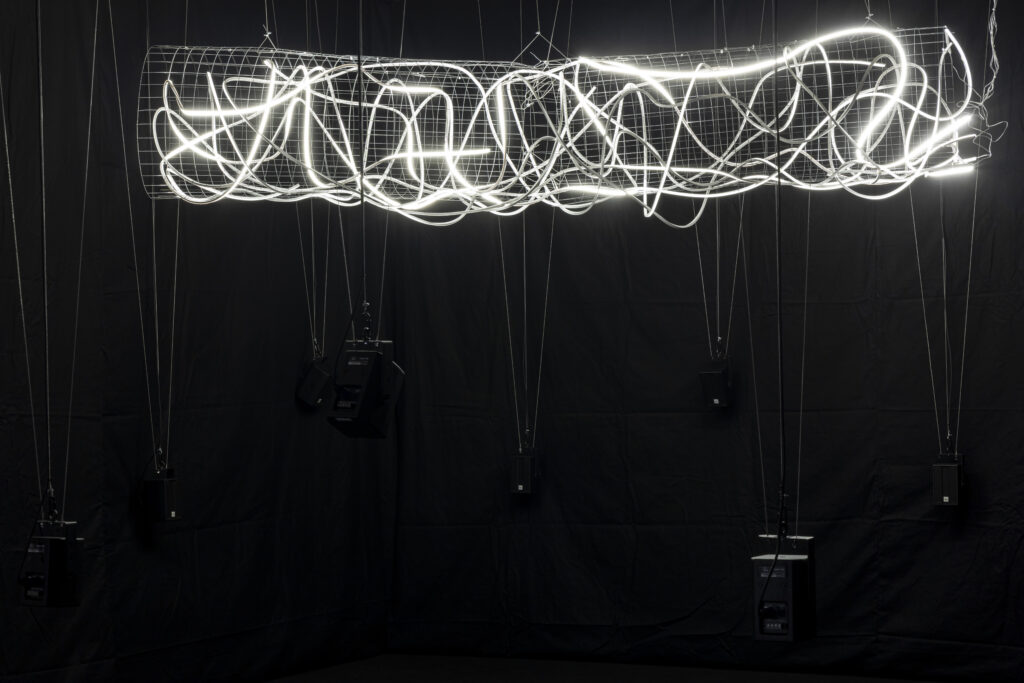
At the end is the listening room: sixteen loudspeakers and two subwoofers in a square area, 16.2 independent channels. You walk in, sit down, and stay. The light is a cloud of LEDs inside a wire mesh, hanging above the loudspeakers: it follows the structure of the sound and responds to whoever is in the room.
“The sound does not just accompany what you see: it becomes narrative material itself,” Gianmarco said when the exhibition was presented.
How we built it
- Twenty-eight loudspeakers in all: ten along the path and eighteen in the room, subwoofers included.
- In the room every loudspeaker has its own channel: a multichannel interface with the eight-output expansion, the power amplifiers, and a single computer running the composition and the light together, the light driven over DMX.
- The loudspeakers hang on steel cables at different heights; all around, black drapes close the room and keep everything else out.
- Hundreds of metres of cable, run and hidden through the spaces of XNL, and a system switched on every opening day for three months.
Giuseppe Messineo, art technologist, was on the team with us.
Designed for visitors who cannot see, too
The exhibition was designed together with the Piacenza branch of the Italian Union of the Blind and Partially Sighted, to be walked through, listened to and touched: audio descriptions of the works, a tactile reproduction of Marco Ricci’s painting, a sculpture by Gabriele Picco 3D-printed to be explored with the fingers. Sound was one of the ways to live inside the clouds.
How it went
- More than eight thousand visitors, 7,200 of them for the exhibition, from seventeen countries, from Japan to Peru.
- 460 students and teachers, from 21 classes, from nursery to secondary school.
- About a thousand people at the theatre, three sold-out evenings.
- Features and reviews on Rai radio and television, in art magazines, in newspapers and in architecture and lifestyle magazines.
For the Foundation, said its vice-president Mario Magnelli, the greatest result was bringing XNL’s three souls together in one exhibition for the first time.
Among others, it was covered by Artribune, Finestre sull’Arte, ATP Diary and ArtsLife, in Italian. The exhibition page is on the XNL website.
The Libertà clippings are in Italian.
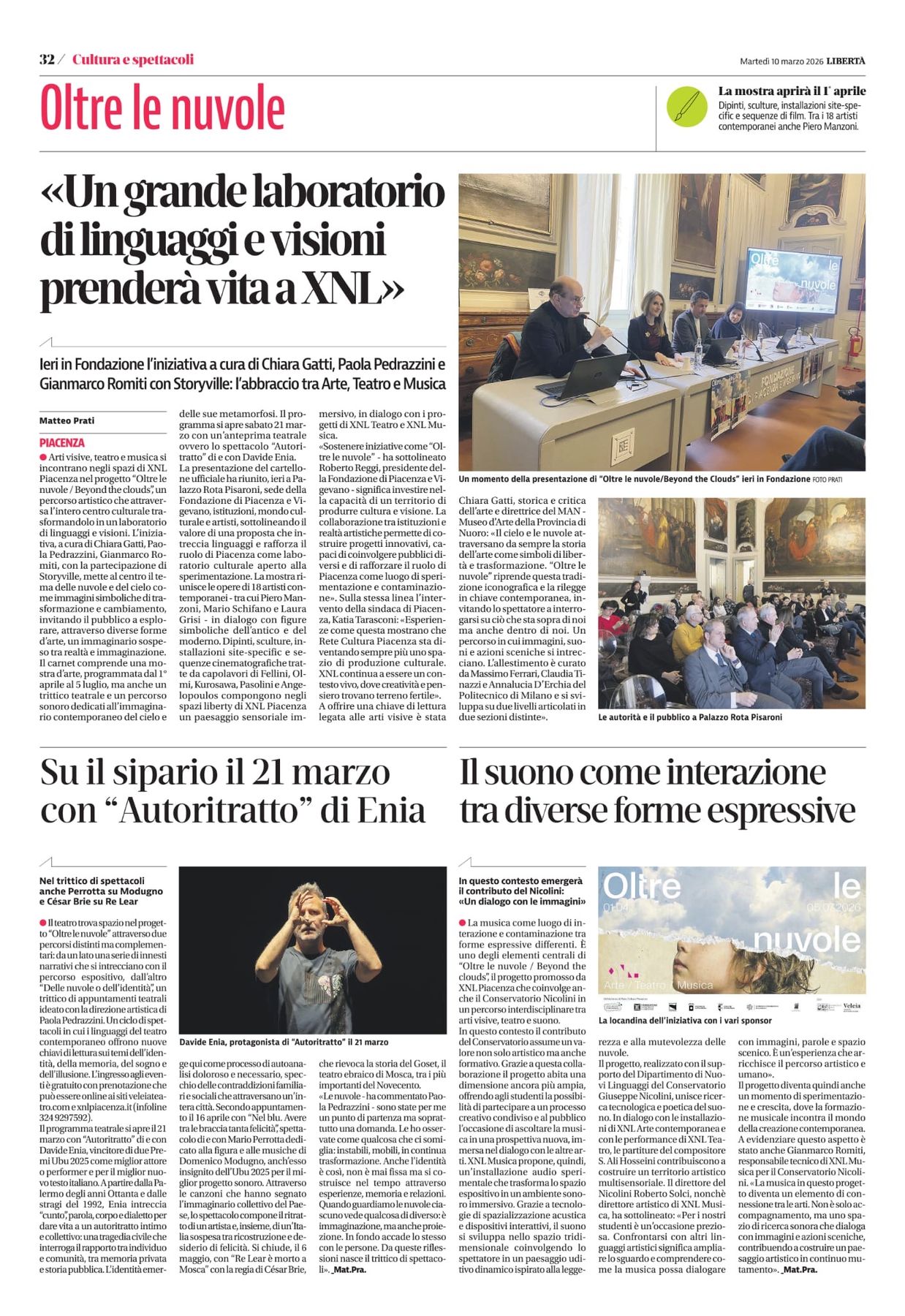 Libertà, 10 March 2026
«Un grande laboratorio di linguaggi e visioni prenderà vita a XNL»
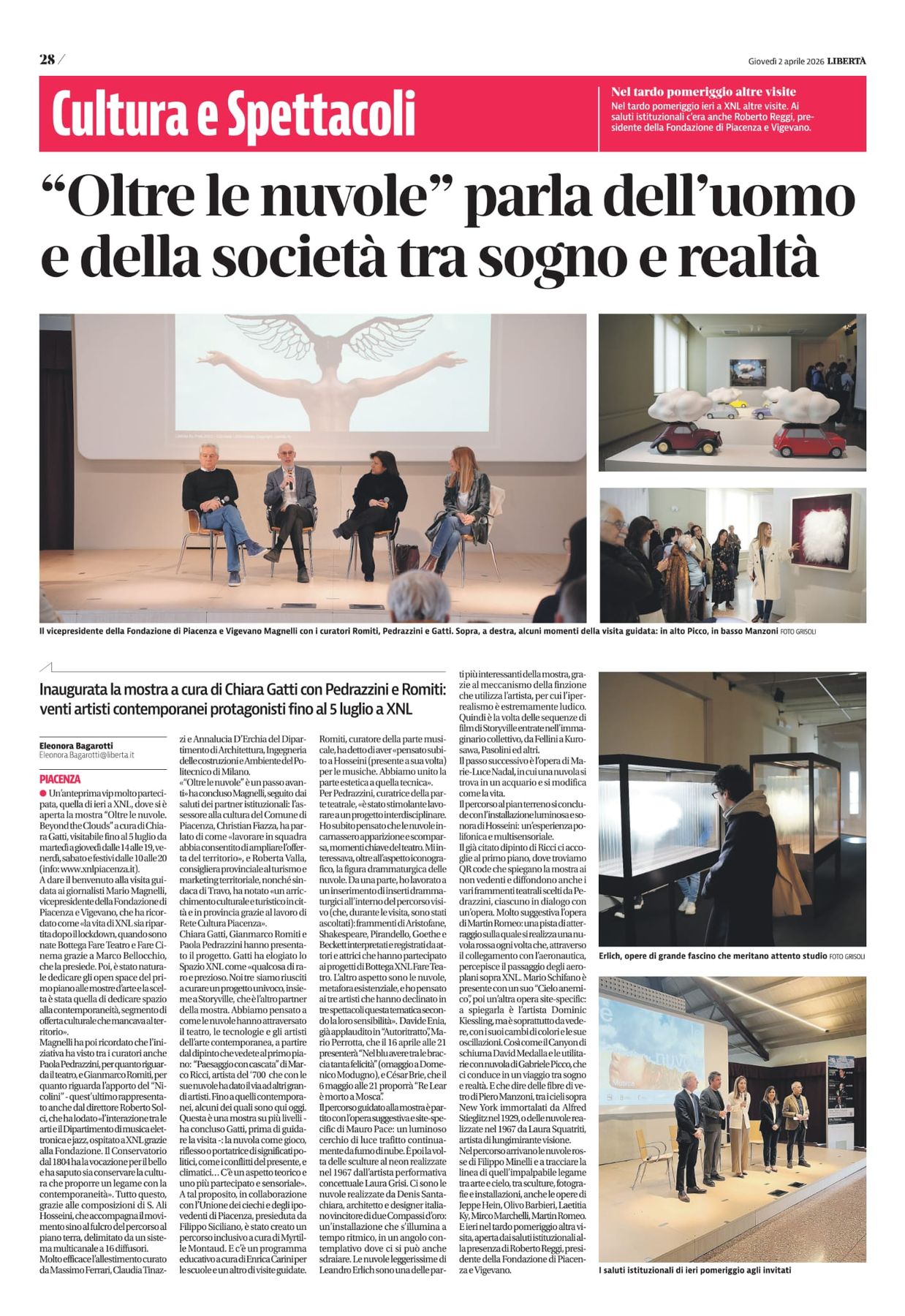 Libertà, 2 April 2026
«“Oltre le nuvole” parla dell’uomo e della società tra sogno e realtà»
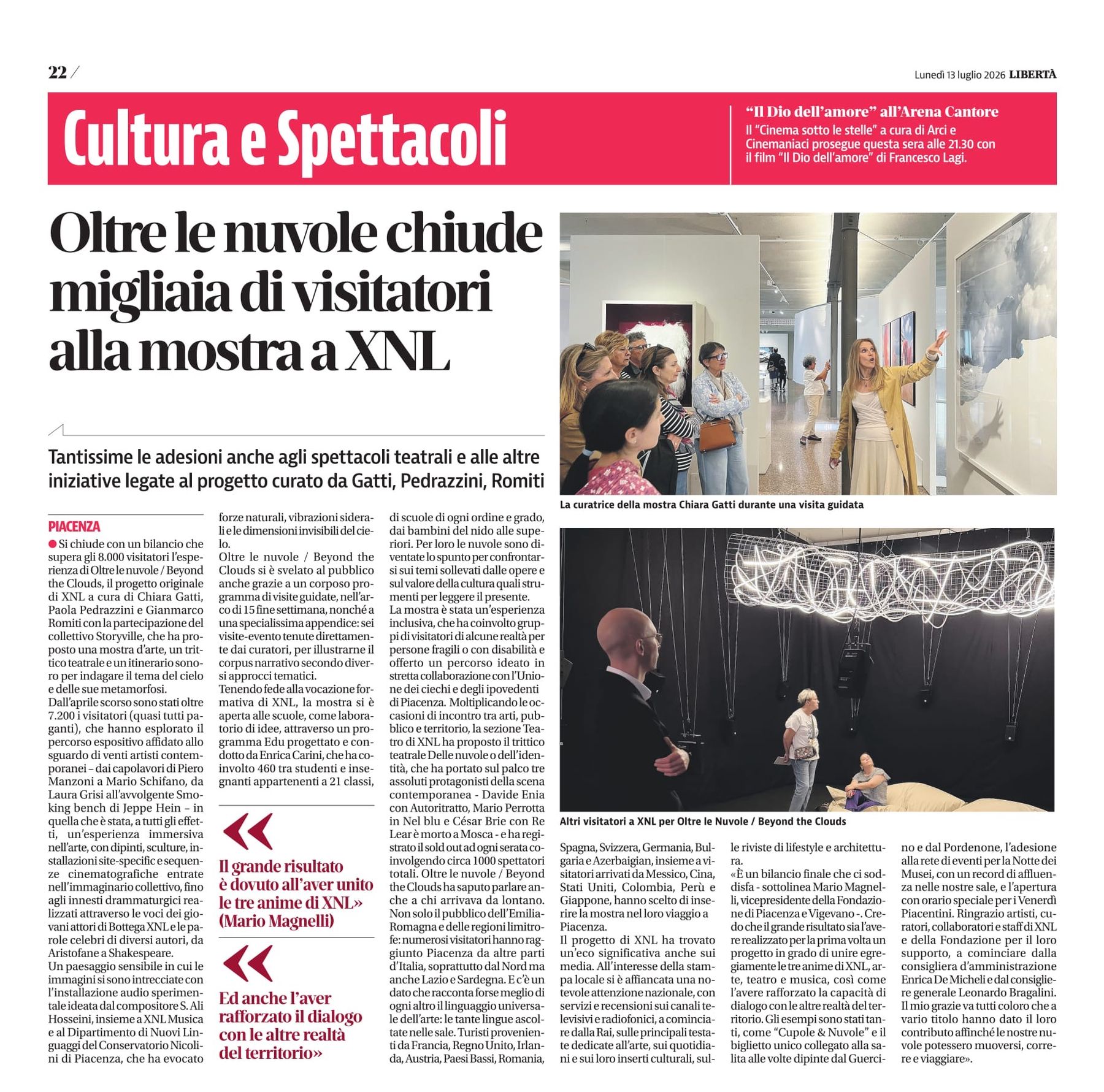 Libertà, 13 July 2026
«Oltre le nuvole chiude, migliaia di visitatori alla mostra a XNL»
When the exhibition closed, the equipment went back to the warehouse. It is the same equipment you find in the audio service configurator, under Installation and exhibition.